
Could my acne be linked to PCOS? Signs, tests and when to seek help
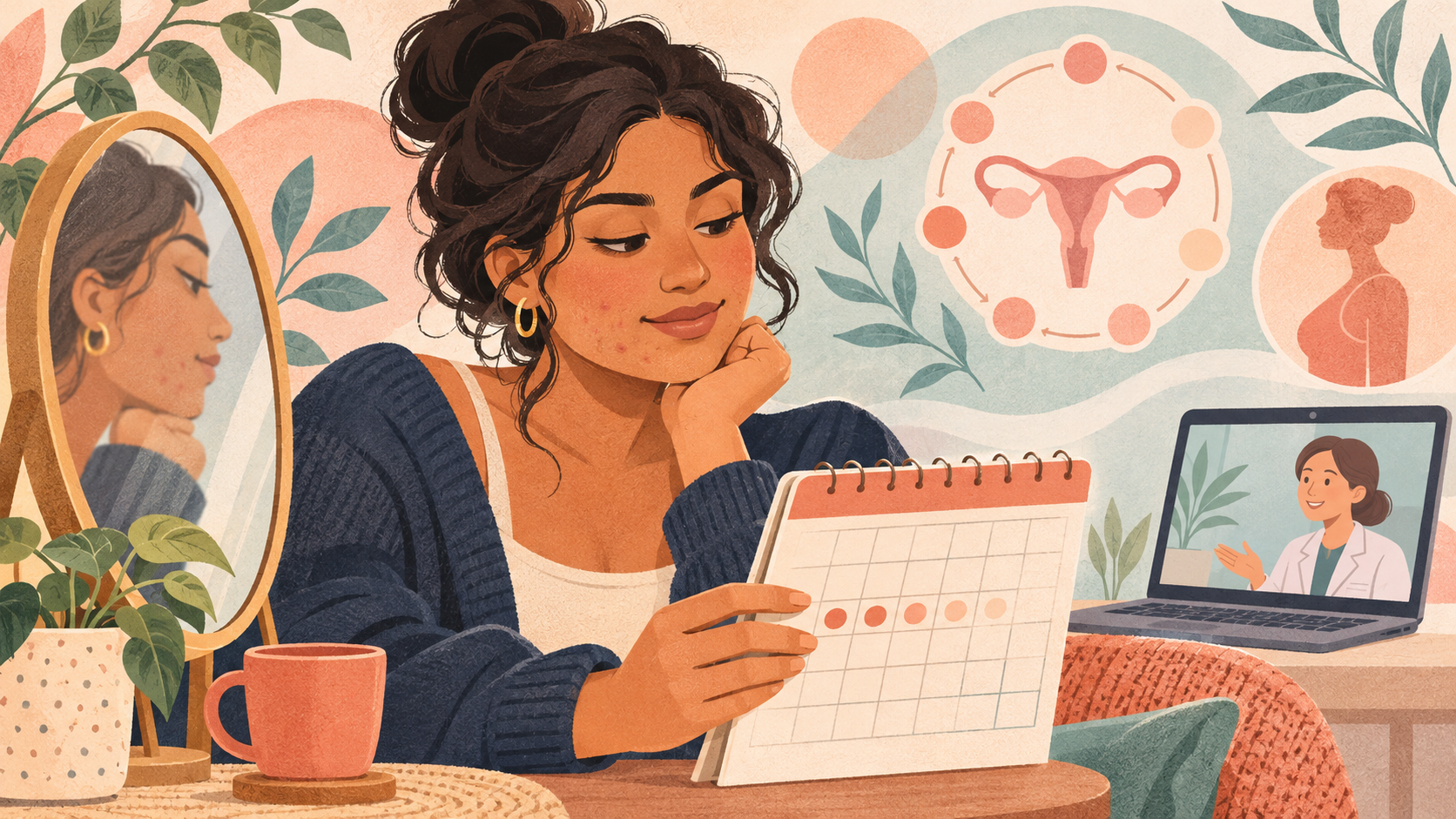
Acne can be one feature of polycystic ovary syndrome (PCOS), but acne on its own does not mean that you have it. The NHS now uses the name polyendocrine metabolic ovarian syndrome (PMOS); you may still see PCOS in clinical guidance and everyday searches.
It is worth discussing PMOS with a GP if persistent acne occurs alongside irregular or absent periods, increased facial or body hair, thinning scalp hair, difficulty becoming pregnant, or other possible hormone-related symptoms. A skin assessment can also help establish how severe the acne is, whether scarring is developing and which treatments are appropriate.
Why can PMOS affect the skin?
PMOS is associated with differences in reproductive hormones and metabolism. Higher androgen levels, or increased sensitivity to androgens, can encourage oil production and blockage of hair follicles. This may contribute to oily skin and inflamed spots.
However, the location of acne cannot diagnose a hormone disorder. Spots around the chin or jaw, adult-onset acne and flares before a period can occur without PMOS. Equally, PMOS affects people differently, so no single skin pattern confirms or excludes it.
Which other signs make an assessment useful?
Consider asking your GP about PMOS if acne is accompanied by one or more of the following:
periods that are very irregular, infrequent or absent
increased coarse hair on the face, chest, abdomen or back
thinning hair on the scalp
difficulty becoming pregnant
unexplained weight changes or difficulty managing weight
darkened, thickened patches of skin, particularly around the neck or underarms
a close family history of PMOS or type 2 diabetes.
These symptoms can have other causes. They also deserve sensitive, individual assessment rather than assumptions about weight, fertility or lifestyle.
How is PMOS investigated in the UK?
There is no single “PCOS test”. An assessment usually starts with your medical history: the timing of your periods, when the acne and hair changes began, medicines and contraception, pregnancy plans, family history and any other symptoms.
Your GP may arrange blood tests to look at hormone levels and exclude other conditions. Depending on the findings, an ultrasound may be offered, but it is not required in every case. International guidance generally bases diagnosis on a combination of features after other causes have been considered: irregular or absent ovulation, clinical or biochemical signs of higher androgens, and polycystic-appearing ovaries.
The word “polycystic” can be confusing. The ovarian changes are follicles rather than the usual type of ovarian cyst, and an ultrasound appearance alone does not establish the diagnosis.
In teenagers, acne and irregular cycles can both be common during puberty. Clinicians therefore interpret symptoms in relation to the time since periods started and avoid relying on a single feature. Rapidly developing facial hair, a deepening voice or very sudden severe acne needs prompt medical assessment because other causes of androgen excess must be considered.
Who should I see about acne and possible PMOS?
A GP is usually the best starting point for investigating periods, hormone-related symptoms and broader health risks. A dermatology or acne clinician can assess the skin, check for scarring and build an acne treatment plan. Some people may also need gynaecology or endocrinology input.
It helps to take a list of current products and medicines, previous acne treatments and how long you used them. If appropriate, note recent period dates and changes in hair growth. Clear photographs can help show how acne changes over time, although they do not replace the wider medical history.
How is acne treated when PMOS may be involved?
Treatment is tailored to the acne rather than based on the label alone. NICE recommends standard first-line acne options, usually reviewed after about 12 weeks. These may include combinations of topical treatments and, where appropriate, an oral medicine. Your clinician will consider severity, scarring risk, pregnancy plans, previous treatment and personal preferences.
Hormonal contraception may help some patients, but it is not suitable for everyone and requires an individual safety assessment. NICE advises that co-cyprindiol, when used, should be reviewed after six months because of its risks. Other hormone-directed medicines are sometimes considered by an appropriate prescriber, with discussion of off-label use, monitoring and pregnancy precautions where relevant.
Oral isotretinoin may be considered for severe acne, acne at risk of permanent scarring or acne that has not responded to adequate standard treatment. It treats the acne, not the underlying PMOS, and it is not suitable for every patient. Current UK safety measures require careful assessment and ongoing monitoring, including mental and sexual health discussions. People who can become pregnant must follow a pregnancy prevention programme because isotretinoin can seriously harm an unborn baby.
Lifestyle support may form part of wider PMOS care when relevant, but acne is not a consequence of being “unclean” or failing to eat perfectly. Avoid harsh scrubs and frequent product changes. A gentle cleanser, non-comedogenic moisturiser and daily sunscreen are a steadier foundation while prescribed treatment takes effect.
When should I seek help sooner?
Arrange an acne assessment if spots are painful, deep, leaving marks or scars, affecting your confidence or not improving after a properly used treatment course. Seek prompt GP advice if hormone-related symptoms develop rapidly.
Get urgent help if severe acne appears suddenly with fever, joint pain or feeling very unwell. If acne is seriously affecting your mental health or you have thoughts of harming yourself, seek urgent support through NHS 111, your GP or emergency services as appropriate.
Frequently asked questions
Does jawline acne mean I have PMOS?
No. Jawline acne can occur with or without PMOS. Diagnosis depends on your wider symptoms and assessment, not the position of spots.
Do I need an ultrasound?
Not always. Blood tests, symptoms and menstrual history may provide the necessary information. Your GP will decide whether imaging would add value.
Will treating PMOS clear my acne?
Managing hormone-related factors can help some people, but acne may still need its own evidence-based treatment plan. Improvement is gradual, and follow-up is useful if scarring or treatment side effects are a concern.
Can I have an acne consultation before PMOS tests are complete?
Yes. Skin treatment and medical investigation can often proceed alongside each other. Tell the clinician about irregular periods, hair changes, pregnancy plans and any tests already arranged.
Taking the next step
If persistent acne is painful, scarring or affecting your wellbeing, a mySkinDoc remote acne consultation can review your skin history and photographs and advise on suitable next steps. An acne assessment cannot diagnose PMOS by itself, but it can identify when GP testing or in-person examination would be sensible. You may also find our guide to adult acne in your 30s and 40s helpful.
References
NICE. Acne vulgaris: management (NG198), recommendations. Updated 30 April 2026.
NHS. Acne.
British Association of Dermatologists. Acne.
World Health Organization. Polycystic ovary syndrome.


